Agency Internal Communication Automation: Stop Being the Human Router
If you spend half your day forwarding messages and asking who owns what, your agency has a routing problem. Here is how to automate internal communication without adding another app.
By SaaSVisionary Team · · 6 min read
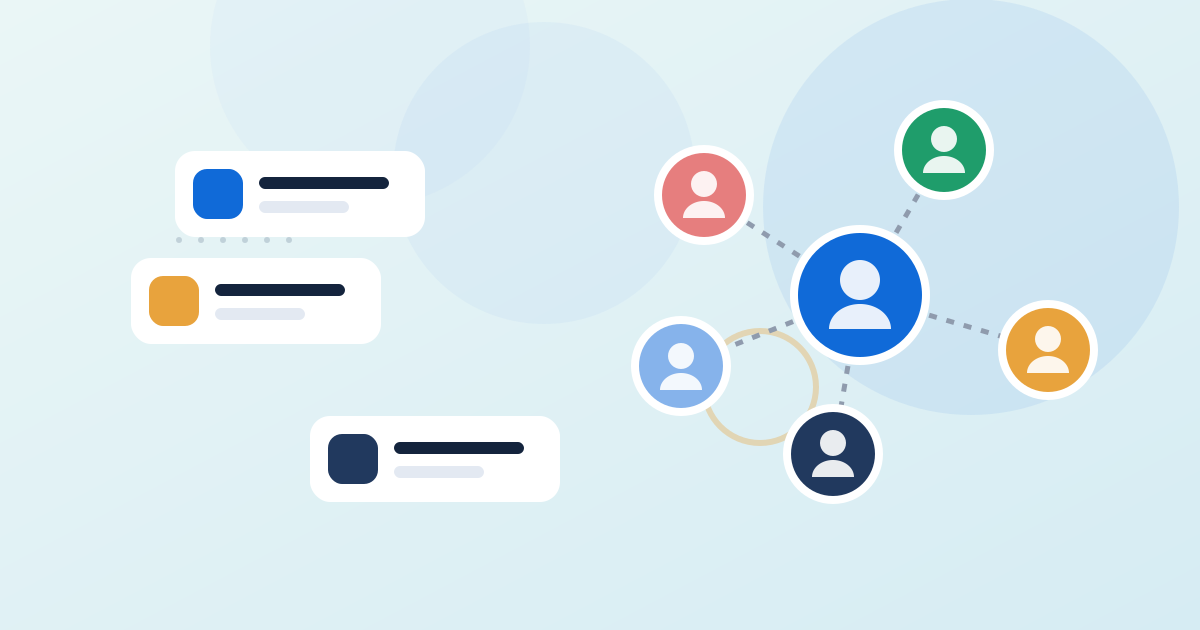
In many small agencies, one person quietly holds everything together. A client emails the owner, who forwards it to the designer. A lead fills out a form, and the owner pings the sales rep in chat. A campaign hits a snag, and the owner remembers to tell the account manager two days later. That person is the human router, and it is exhausting.
The problem is not that your team communicates poorly. It is that information enters the business in a dozen places and depends on someone noticing it. Automation fixes the noticing part. When an event happens, the right person hears about it, with the context they need, without anyone relaying it.
This playbook walks through how to map your internal messages, decide which ones to automate, and roll them out without drowning your team in notifications.
Signs your agency has a routing problem
Run through this list honestly. If three or more sound familiar, internal automation will pay off quickly:
- People regularly ask “Did anyone reply to that client?”
- New hires spend their first week asking where things live.
- Handoffs from sales to delivery happen in a hallway conversation or a DM.
- Deadlines slip because nobody saw the approval come in.
- The owner is copied on almost everything “just in case.”
- Status meetings exist mostly to share information a system already knows.
Step 1: Map where information enters the agency
Before building anything, spend thirty minutes listing every source of events that someone on the team needs to know about. For a typical agency, it looks something like this:
| Event | Where it happens today | Who needs to know |
|---|---|---|
| New lead submits a form | Website form | Sales lead |
| Proposal is signed | Proposal or e-sign tool | Delivery lead, billing |
| Client sends an urgent message | Email, SMS, chat | Account manager |
| Client books a meeting | Calendar | Account manager, strategist |
| Invoice is overdue | Billing | Owner, account manager |
| Negative review lands | Review sites | Account manager, owner |
| Task is overdue | Project or CRM tasks | Task owner, team lead |
The goal of this map is to spot the events that already live in one system. Those are the easiest to automate first.
Step 2: Pick the right message type for each event
Not every event deserves an instant ping. Sorting them into three types keeps your team sane.
Instant alerts
Reserve these for things that lose value by the minute: a hot lead, an upset client, a missed call from a VIP. Send them to one named person, not a whole channel.
Assigned tasks
When an event requires work, create a task with an owner and a due date instead of sending a message. A signed proposal should create onboarding tasks, not a “FYI, we won it!” that everyone reads and nobody acts on. We cover this in more detail in our guide to turning CRM events into agency tasks.
Digests
Everything else can wait for a daily or weekly summary: new reviews, pipeline movement, campaign stats, upcoming renewals. One digest beats twenty scattered notifications.
Step 3: Build your first five automations
Start small. These five cover the most common gaps for agencies of three to fifteen people.
- Lead routing alert. When a form is submitted, assign the contact to the right rep based on service or location and notify that rep by SMS or email. Pair this with speed-to-lead follow-up so the prospect hears from you fast, too.
- Sales-to-delivery handoff. When a deal moves to “Won,” create a kickoff task for the delivery lead with the deal notes attached, and post a short summary to the team.
- Client message escalation. When a client message contains words like “urgent,” “cancel,” or “problem,” or comes from a tagged key account, alert the account manager directly.
- Overdue task nudge. When a task passes its due date, notify the owner once, then the team lead a day later if it is still open.
- Weekly team digest. Every Monday morning, send a summary of new deals, upcoming client meetings, and tasks due this week.
On SaaSVisionary, these run through workflow automation using the same contact and pipeline records your team already works in, so the alert carries the context instead of just a link.
Step 4: Write alerts people can act on
A bad alert says “New activity on contact.” A good one answers who, what, and what next. Here is a simple format:
[Event] for [Client or lead name] What happened: [one-line summary] Why it matters: [goal, deal value, or deadline] Next step: [the specific action] by [time] Open record: [link]
For example, a four-person agency, Harbor & Pine Digital in Portland, uses this for client escalations:
Urgent client message for Cascade Dental What happened: Office manager says the new booking form is not sending confirmations. Why it matters: Their ad campaign is live and driving form traffic today. Next step: Call back within 30 minutes and check the form workflow. Open record: [link]
Notice there is no “please review when you get a chance.” The alert tells the recipient exactly what to do.
Onboarding new team members automatically
New hires are where internal communication most often breaks. You can automate much of week one:
- Day 0: Welcome email with logins to request, the team directory, and the first-week schedule.
- Day 1: Intro post to the team with their role and a fun fact they supplied.
- Day 2: Task list of shadowing sessions, each assigned to the teammate they will shadow.
- Day 5: Check-in message from their manager asking what is still confusing.
- Day 30: Reminder to the manager to hold a 30-day review.
Keep the underlying documents current. Automation that sends a link to an outdated handbook just spreads confusion faster.
Avoiding notification overload
The fastest way to kill an internal automation project is to over-notify. Watch for these mistakes:
- Channel spam. Posting every event to a shared channel teaches people to mute it.
- No owner. An alert sent to “the team” is an alert sent to no one.
- Duplicates. Make sure one event does not trigger three overlapping workflows.
- Never pruning. Review your automations quarterly and switch off the ones nobody acts on.
A useful test: if someone receives an alert and the correct response is “nothing,” that alert should probably be a digest line instead.
Frequently asked questions
What internal communication should an agency automate first?
Start with events that already live in one system and cause real pain when missed: new lead assignment, the handoff from sales to delivery, and urgent client messages. These are easy to trigger reliably and have a clear owner. Leave nuanced conversations, like performance feedback or strategy debates, to people.
Do I still need a team chat app if I automate internal alerts?
Most teams still use chat for quick conversation, and that is fine. Automation reduces the volume of routine updates that clog chat by sending alerts to specific owners and bundling the rest into digests. The goal is fewer, more useful messages, not replacing conversation between colleagues.
How do I stop automated alerts from being ignored?
Send each alert to one named owner, include the next action and a deadline, and move low-urgency updates into a daily or weekly digest. Review which alerts people actually act on and remove the rest. When every alert matters, people learn to trust and respond to them.
Can internal automations send texts to my team?
Yes, many platforms can send SMS alerts to staff, which works well for time-sensitive events like hot leads. Keep staff texts brief and limited to urgent items. On SaaSVisionary, SMS sending starts on the Pro plan and runs through your own connected messaging provider.
Want to retire the human router at your agency? Start a free 14-day trial.